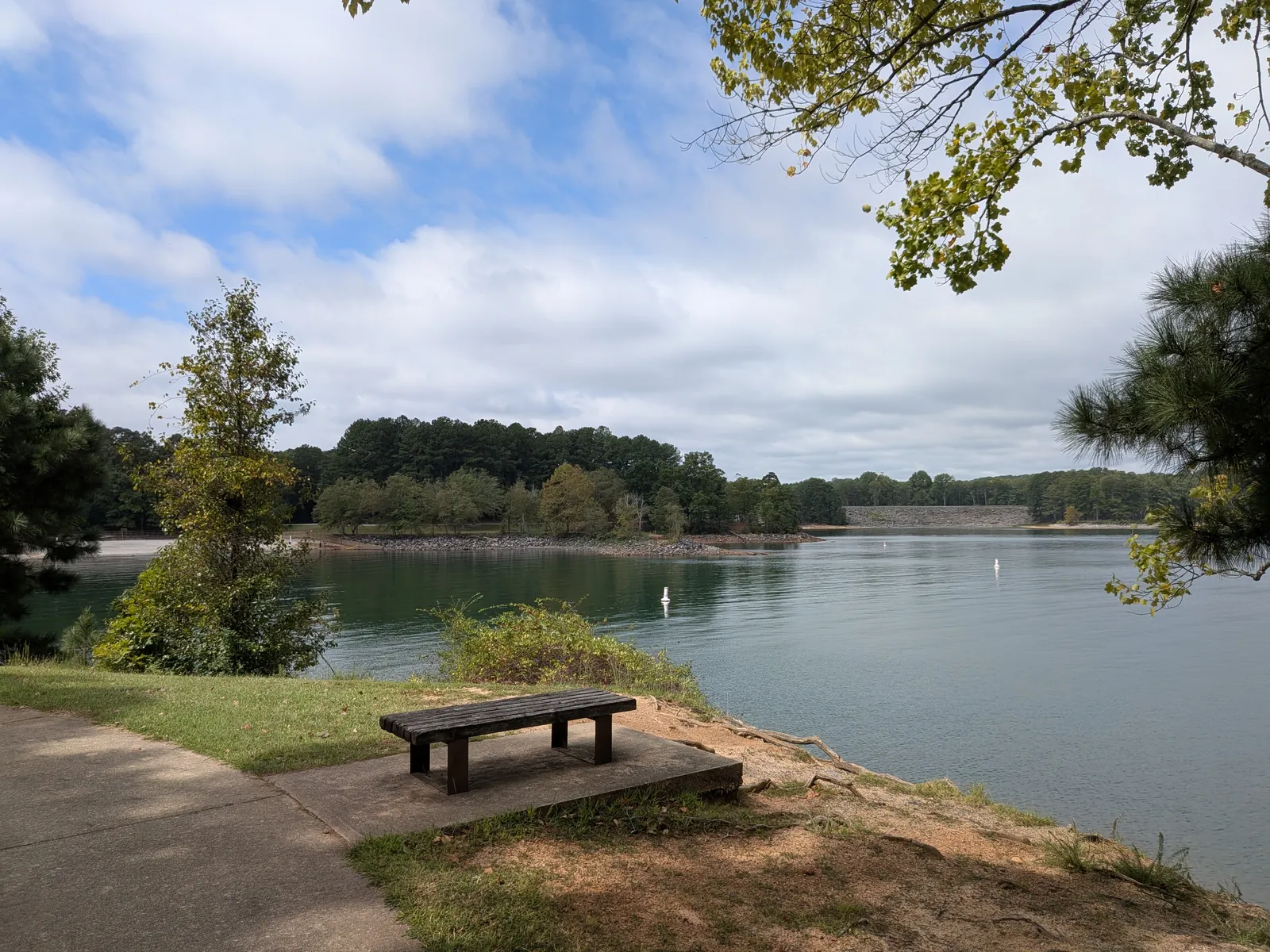
CUMMING, Ga. — Is the county's tap water getting better, and when will the earthy taste be fixed? On the county's own FoCo Unplugged podcast, published Oct. 9, Water & Sewer Director Scott Adams said levels are still high, that treated water sometimes stays above the taste level, and that the county is designing a bigger ozone system. He gave no date or price for it. FoCo Unplugged, Oct. 9, 2026
What Adams said
- Raw water: The highest reading this year was "right at 300 parts per trillion" in early September. The most recent raw-water test, which he did not date, was 52 ppt, which he said is still an extremely high number for the county. He said before the last two years, 50 would have been a surprise.
- Treated water: He said levels going to customers run from about 5 to 25 ppt, depending on the raw water and the blending ratio, and are sometimes below 10 ppt and sometimes not. He put the detection level at about 10 ppt.
- Why the current system isn't enough: He said the ozone system was not built for levels this high, so the plant treats part of the flow with ozone and blends it back in.
- The plan: Adams said the county is designing a full-plant ozone system that would treat all the flow through the plant. He gave no cost, date or contractor.
- Safety: He said the water is safe to drink.
What the county's records show
The second intake is a 2031 project. Adams described the Tidwell Park intake as a step toward water independence and backup supply. The county's project page gives an estimated total cost of $188 million, funded by local sources, with completion estimated for 2031. The county closed Tidwell Park on Aug. 3, 2026, for the intake shaft work. The county says the intake will not increase permitted withdrawals from Lake Lanier. It lists "improve water quality through a better intake location" as a benefit, but it does not say the intake treats taste or odor. It will not help this season. County project page
The ozone system the county already has. The county added ozone at its Antioch plant in July 2023, saying it could be turned on and off as needed and could treat more water than its powdered carbon system. 2023 release
The full-plant project is not named in the Sept. 3 agenda. The Sept. 3, 2026 board agenda includes design work for a sewer lift station, not ozone. We did not find an ozone design contract by name in that agenda. That does not mean none exists, because design work can sit under older task orders. Sept. 3 agenda
The capital plan has a taste-and-odor line, and its money comes later. The county's 2026–2030 Capital Improvement Program lists "WTP - Taste & Odor Enhancements" (code WW045), a project for added treatment to deal with taste and odor in raw water from Lake Lanier. It carries $1,913,365 in 2029 and $7,767,136 in 2030, $9,680,501 over five years, plus $8,000,150 more for 2031–2035. The group's source table lists tap fees and cash from operations, with SPLOST IX and bonds at zero. 2026–2030 CIP, p. 42
The county's adopted 2027–2031 plan, approved Sept. 3, shows "Water - Facilities" at $67,509,776 over 2027–2031, up from $49,236,001 for that group in the earlier plan. The adopted document we read has only summary pages. It does not name projects, so it does not show what the increase pays for. 2027 adopted CIP, p. 5
Money. On the podcast, Adams said water and sewer is funded by ratepayers, not property taxes, through capital funds, bonds as needed, some grants, and a small amount of SPLOST IX. The county's SPLOST page lists $60 million projected for water facilities under SPLOST IX and names the Water Intake Facility as its water project. Nothing we read ties SPLOST money to ozone. SPLOST page
What is still not clear
- The date of the 52 ppt raw-water reading, and whether the county publishes raw-water results.
- Whether the full-plant ozone project is in the adopted 2027–2031 plan, what it costs, and when it would run.
- Whether the county tests Lake Lanier or treated water for cyanotoxins, and what it found.
- Why levels are higher than they used to be. Neither Adams nor the county has said.
For the county's September figures and the background on the earthy taste, see our earlier article.